- Les Adore Community
- Posts
- Slice Of Life Community
Slice Of Life Community
Your personal and exclusive serving of Culture, Community, and Lifestyle.

Amina Salahou
February 19, 2026
Editor in Chief: Cynthia Medina

Ramadan Mubarak!🌙 This month marks the observance of Ramadan, the holiest month in the Islamic calendar. For millions of Muslims around the world, it is a time of spiritual reflection, daily fasting from dawn until sunset, and increased focus on charity and community. Families and friends gather each evening to break their fast with a meal called iftar. To all who are observing in our community, we wish you a peaceful, healthy, and blessed month.🤍
Looks, Leagues & Legacy: Black and Ivy Style & Notes on Black Excellence🖤
Black excellence, noun: the notion that black people who are educated, smart, articulate, poised, and basically every other positive adjective you can think of are atypical or rarities among the general black population.
Standing for intellectualism, culture, and activism is Black Ivy League style; a derivation of the 1930s Ivy league style which began picking back up in the 1950s and 60s. Tweed blazers, button down collars, and wingtip shoes defined Ivy League style as much as Black Ivy. This curated styling demanded respect by leveraging its social currency as a symbol of elitism to propel the wearer to a higher status. While both parties embraced the same staple items, a key difference was the flair added; a subversiveness that made it edgy and cool, a visual assertion of dignity.

Black Ivy often incorporated workwear fabrics like denim, as well as sunglasses, an allegory for their disdain for and detachment to the world. As a symbolic suit of armor, Black Ivy was a sartorial power grab frequented by icons John Lewis, Malcolm X, and Sidney Poitier. Its evolution continued in synonymity with activism and progressive thinking to a moniker of cultural storytelling that blended the past with the present and tradition with innovation. Black Ivy has always remained within Black fashion, evolving; explicitly referenced in the esteemed Ralph Lauren x Morehouse College & Spelman College collection, giving spotlight to the rich history of the HBCU fashions. And while it might not be a daily occurrence, Black Ivy is always present in college graduation shoots, a true embodiment of “Black Excellence”.

As of 2023, roughly a quarter of all Black U.S. adults ages 25 and older have a bachelor’s degree or more education. Henry Lyman Morehouse’ coining of the term “The Talented Tenth” (which was later referenced by W.E.B DuBois’ in his 1903 book The Negro Problem) recommended that higher education was the place to develop the leadership capacity among the most able 10% of Black Americans. Arguing for Black advancement and the creation of an elite intelligentsia and leadership class, HBCUs and Jack and Jill adopted and applied this philosophy, with the prospect of “uplifting the race” in the first decades of the twentieth century.
Much like the prospect of being “disgustingly educated”, this promotion of intellectualism can portray [academic] education as the only metric of success– and deposits the psychological burden of not “uplifting the race”. In modern day, it's known as Black Excellence– but regardless, there are a multitude of ways to “uplift” the race, the main of which includes our existence in itself.
Dapper Dan: A Harlem Fashion Pioneer✨
We’re continuing our journey of exploring historically under credited designers this Black History Month. This week we are diving into the lore of esteemed couturier Dapper Dan.

Daniel Day, later known as Dapper Dan, was born in 1944 in Harlem. He was born just after the peak of the Harlem Renaissance, and this no doubt inspired his future designs. He also cites his mother, a fashion illustrator, as a major influence. Dan was a natural-born hustler, becoming a skilled gambler at the age of 13. This skill would allow him to later finance his first store, which he opened in Harlem in 1982.
Dan’s legacy rests on his unique, innovative way of sampling and remixing luxury fashion in unexpected ways. One of his trademarks from his early designs was turning en-vogue logos from esteemed fashion brands like Gucci, Fendi, and Louis Vuitton into ready-to-wear casual fashion through jackets, tracksuits, and luscious furs. This was revolutionary; at the time, the brands were still primarily focused on handbags. His styles were also utilitarian, using small design details like hidden second pockets. Through these elements, Dan paved the path to a new genre of high fashion: upscale streetwear.

He helped define the looks of early mainstream hip-hop. LL Cool J, Eric B. and Rakim, and other popular artists and celebrities at the time sported his designs. Despite facing initial disapproval from the high-fashion brands that inspired him, among many other collaborations, he ended up partnering with Gucci and releasing a capsule collection with them, as shown in the image above.
By Kennedy Chambers
Before the Pearls, There Was Punk🎸
Excerpt from Cheeky Magazine Issue No. 1, “GUTS”
Founder of the iconic “SEX” boutique, Vivienne Westwood is celebrated as a high-fashion icon–renowned for her mastery of the French silhouette, tartan, and elegant pearls. But her beginnings were far from the opulence she’s known for today.
In 1970s London, Westwood was a radical punk. At a time when society enforced strict norms around class, gender, and sexuality, she opened her infamous “SEX” boutique in direct defiance of convention. There, she embraced punk’s spirit, selling gender-subversive clothing rooted in anti-capitalist, pro-worker, and anti-fascist ideals. She weaponized fashion, embedding subversive symbols into her designs to challenge oppressive power structures head-on.
“Unlike anything else going on in England at the time,” SEX was “more than a store; it became a cultural phenomenon–a crucible where art, music, and fashion collided to challenge norms and spark a revolution.” Here are two of her most famous pieces from the SEX (and Seditionaries) era:
The “God Save the Queen” shirt
Complete with anti-monarchy slogans and Queen Elizabeth II defaced with a safety pin through her lip.

This defaced royal portrait served as a raised middle finger to the crown—and an intentional assault on British elitism. Westwood pulled in the Sex Pistols’ anarchic lyrics (“There is no future in England’s dreaming… She ain’t no human being.”) and paired them with a disfigured image of the Queen, framing the monarchy as an enemy of the working class.

The “Tits” top
A middle finger to patriarchal modesty.
The “Tits” shirt celebrates female sexuality while challenging objectification. Featuring an uncensored image of bare breasts on a simple tee, it rejected modesty standards that confined women’s expression and made sexuality public and casual—disrupting the notion that it should be hidden.


If you want to read more about Vivienne Westwood’s legacy (and other thought-provoking pieces on fashion and culture), check out Cheeky Magazine’s newest issue, “GUTS,” out now.
Mid-Week Reset🫐
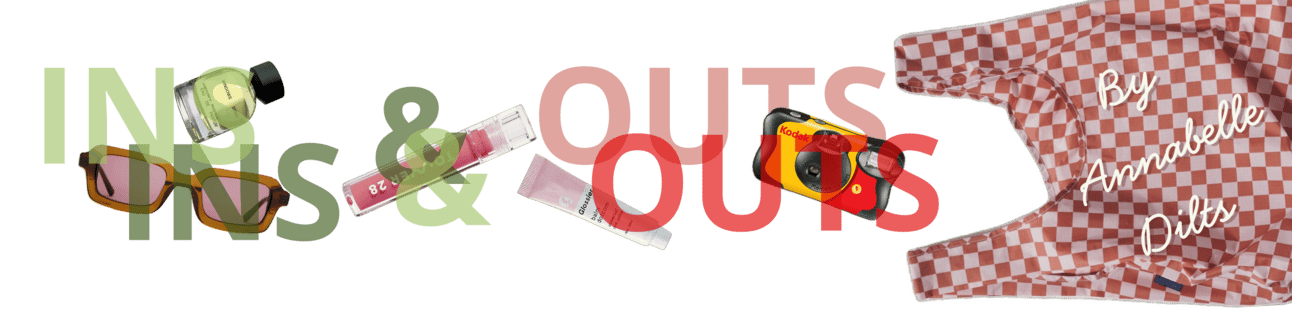
Sundays aren’t the only days when work becomes too much to handle. My personal in for this month is resetting whenever your body needs it.
First, keep yourself organized. Whether you’re balancing school and work or fashion shows and flights, this Papier planner will give you the structure you need.

Next, the Offline Cloud Fleece set will keep you comfy and presentable–perfect for balancing resets and relaxation.

And what we all need is a pick-me-up. Pair Javvy Protein Coffee (yes, upping your caffeine and protein intake) with a BURGA polka-dot travel mug. Consider it a purchase that’s both trendy and genuinely useful.


In my daily life, I’m resistant to new movies. I subconsciously wander in and out of comfort films like rooms in my house. Watching something new feels too vulnerable. Every day is already full of discomfort–why add to it? But in the last week of January, I packed my bags in the middle of an ice storm and escaped to Park City, Utah, to watch new movies. I walked into Sundance with open arms and left with a heavy heart, filled to the brim with emotion. I expected to be uncomfortable, surprised, excited–but not changed. Then I came across Birdie.
Birdie visually embodied the sadness of losing an old life I had never fully unpacked–a feeling only immigrants know the depths of. Praise Odigie Paige beautifully summons a story of sisterhood, resilience, and identity in only 21 minutes. It follows a 16-year-old Nigerian girl, her sister, and their mother as they take refuge in the plains of Virginia in the aftermath of the Biafran War. In a threshold of green pastures, lethargic days pass in prayer and dreaming. Watching this story felt like my heart being pulled apart, piece by piece. Paige is truly a master storyteller, both visually and lyrically. Birdie is a rare bright light–and it won’t remain hidden for long.


By Sarah Shrader
Protein Water and Other American Symptoms🫘
Wellness is complicated in America. The U.S. represents the largest health economy in the world, yet no one can agree on what “healthy” even is. It feels extreme, and completely overwhelming.
From crushing, relentless marketing schemes to endless social media algorithms, perfection is always just out of reach.
This week, I wrote a paper about Kroger’s Simple Truth Protein Line. It’s so reflective of the American caricature of hyper-protein obsession and health-fad susceptibility. Don’t get me wrong, I’m getting my grams in–but when do we wake up, smell the coffee, and realize maybe we’re trying to optimize life too much?


I mean, they’re selling protein water. Yep. Protein. Water.
Chicken bites, waffles, peanut butter, bagels, and rice are all now protein-enhanced under the guise of health.
What I find impossible about being a young adult right now is that we’re all trying to figure out how to take care of ourselves, stay healthy, stay fit–and corporations feed us endless products and advice in pursuit of capital gain.
So that brings me to the real question: is this protein craze actually healthy, or is it a false “health” stamp of approval designed to make us feel better about our consumption habits?
Are we falling for it?

Foley Artists, the Magic You Don’t See🎶
In the world of filmmaking, we often celebrate actors, directors, and visual effects artists. However, there’s a group of unsung heroes who bring movies to life in a way we often overlook: Foley artists. These talented individuals create everyday sound effects that sync with the action on screen.
Foley artists use a variety of objects and techniques to produce sounds like footsteps, breaking glass, or rustling leaves. Their work adds depth and realism to scenes, making the viewing experience more immersive. For example, the sound of a punch in a fight scene might be created by hitting a piece of meat or snapping a leather jacket.
The art of Foley is both creative and technical, requiring a keen ear and a vivid imagination. Next time you watch a film, pay attention to the sound effects–you might be surprised by how much they contribute to the overall impact. Foley artists deserve recognition for their crucial role in filmmaking.


See you next week!
