- Les Adore Community
- Posts
- Slice Of Life Community
Slice Of Life Community
Your personal and exclusive serving of Culture, Community, and Lifestyle.

Amina Salahou
February 12, 2026
In partnership with

Editor in Chief: Cynthia Medina
By Kennedy Chambers
DIVAS, DANCERS AND BUNNIES: The Legacy of ZELDA WYNN VALDES
For this week’s Runway Radar, we’re throwing it back to the early 20th century to honor the legendary designer Zelda Wynn Valdes.
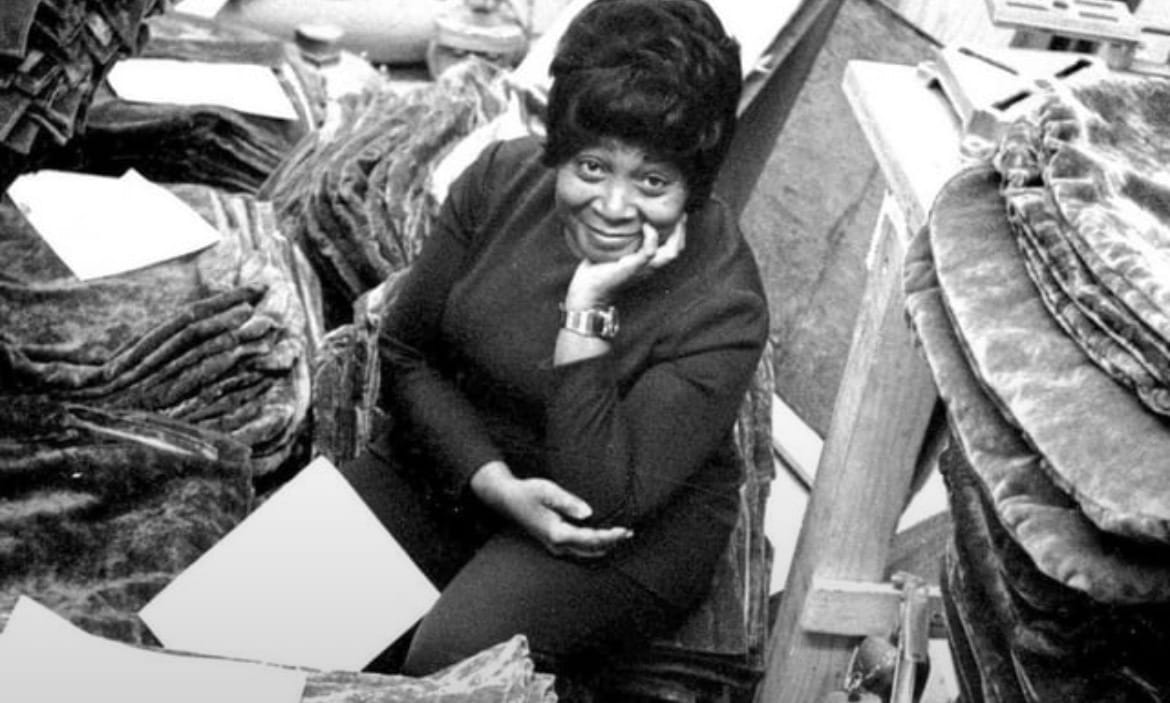
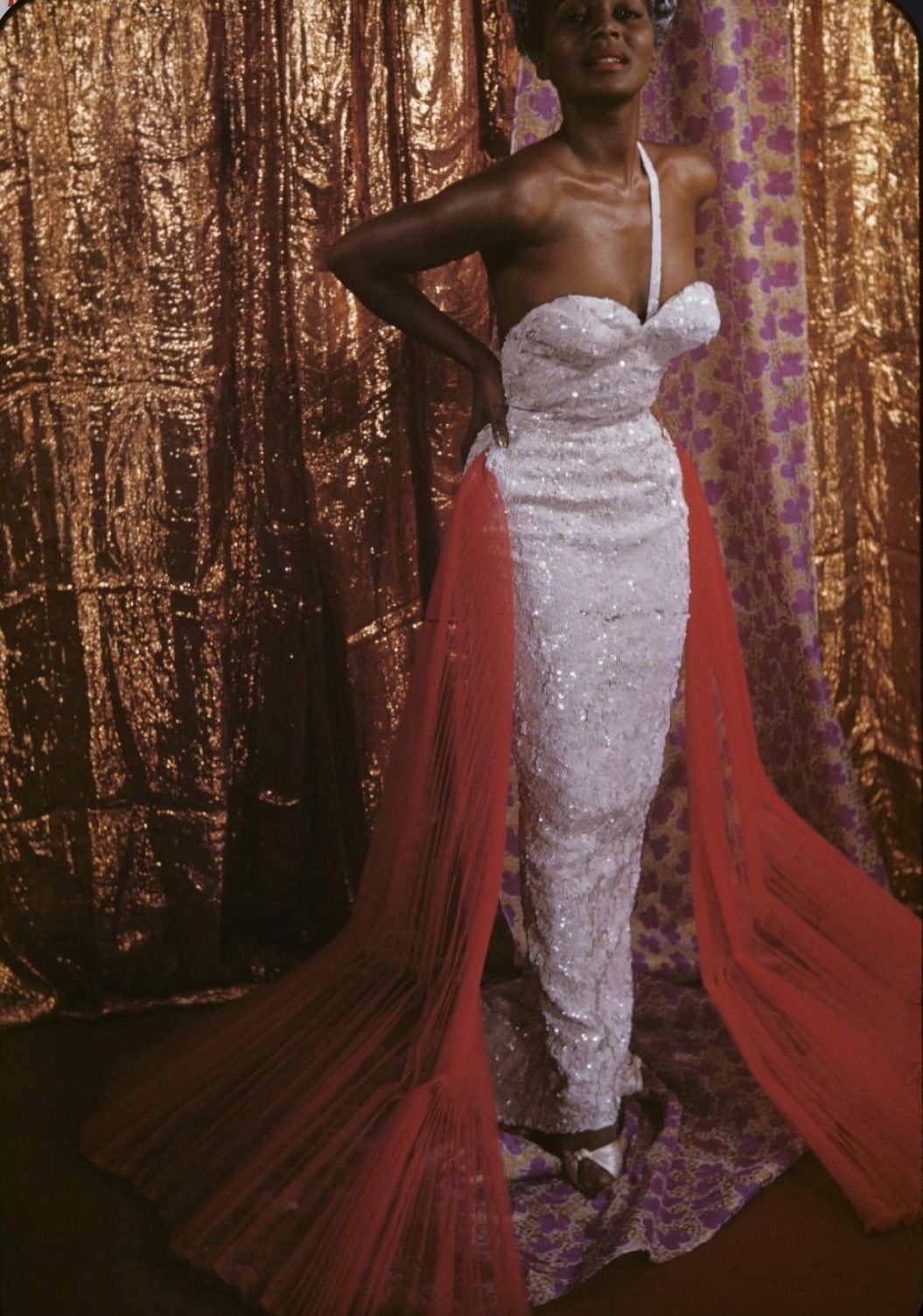
“I just had a God-given talent for making people beautiful.” Zelda Wynn Valdes (1905–2001) was an American designer who dressed icons like Joyce Bryant, Dorothy Dandridge, and Eartha Kitt. She also worked as a costume designer for the Dance Theatre of Harlem and helped create the iconic Playboy Bunny costume. Valdes believed firmly that it was the job of clothes to fit the woman, not the other way around.

Her career began during segregation, a time when Black seamstresses were often relegated to low-wage service work and kept out of white customers’ sight. Titles like “designer” or “couturier” were typically reserved for esteemed white men. Yet after years of working behind the scenes in boutiques, Zelda Wynn Valdes built her own clientele and eventually opened her own shop, often credited as one of the first Black-owned businesses on Broadway.

Beyond her boutique, Valdes made history by creating tights for Black ballerinas that matched the dancers’ skin tones. She directed the Fashion and Design Workshop of the Harlem Youth Opportunities Unlimited and Associated Community Teams (HARYOU-ACT), taught costume design, and was a founder of the National Association of Fashion Accessory Designers–an industry group dedicated to promoting Black talent in fashion.
Valdes’ beautiful, opulent, and timeless designs–paired with her impact on the industry–cannot be understated. Her work embodied old Hollywood glamour, and her influence is still felt today.
THE FASHION OF JAZZ🎷

Jazz bars are the new hottest thing; the ambiance and seductive intimacy of live music and cocktails enchant us to the escapist world of jazz itself. Contrasting its widespread aestheticization, jazz is a multilayered, complex, Black art form filled with improvisation and encompassing every emotion through musical composition.
Parized by the Harlem Renaissance, also known as the New Negro Movement, this era championed Black self expression through art, literature, fashion, and of course jazz. Pioneers like Langston Hughes, Duke Ellington, and Louis Armstrong redefined their respective arts, aiding in the emerging cultural significance of jazz and its synonymity with Black creativity and innovation. Notable venues include Lennox Lounge, Apollo Theater, and Cotton Club, of which the great Billie Holiday, Ella Fitzgerald, and Duke Ellington performed. This artistic and cultural movement further blossomed in the Fillmore Jazz district in San Francisco during the 1950s, especially at the Majestic Ballroom (now the Fillmore Auditorium) as the “Harlem of the West”.

Bold colors, intricate suits, and attention to detail defined the fashion, blending innovation, elegance, confidence, and independence. Dandyism coupled with the gender bending fashion of the 1920s exuded personal expression, weaponizing fashion to challenge the cultural, social, and economic standards of the time– defining and expressing Black pride and identity. Menswear included zoot suits and fedoras while women’s included long pearl necklaces, flapper dresses and cloche hats to compliment their short hair.

Parallel to this era defined as a “spiritual coming of age”, Miles Davis, one of the most notable and influential jazz artists ever, crescendoed from fashion mimicry to defined personal style. With his fashion as a personification of his music, he began donning starched Brooks Brothers suits and later explored oxford cloth button downs, casual chinos, loafers and turtlenecks as he discovered his personal style. While redefining genres with “Witches Brew”, he redefined menswear as well with scarves, vibrant colors, leathers, and most notably his bug-eyed sunglasses. He later delved into Japanese avant-garde, modeling for Issey Miyake and Kohshin Satoh and ultimately developed and defined himself through personal style in what High Snobiety remarked was using clothing “the way he used sound: to challenge, provoke, and reinvent”.


Thanks to these pioneers, jazz has been embraced by other countries to blend their distinct flair and create new genres like jazz bossa nova, jazz house, and Japanese jazz fusion. Thanks to artists like Laufey and Berlioz reigniting the beauty of this art form, cities like Los Angeles are experiencing a jazz resurgence. But as we continue to explore the world of jazz and its deep roots, we must also pay homage to the Black pioneers and culture that shaped it, because Black history is American history.

“The Only Thing More Powerful Than Hate Is Love”🏖️
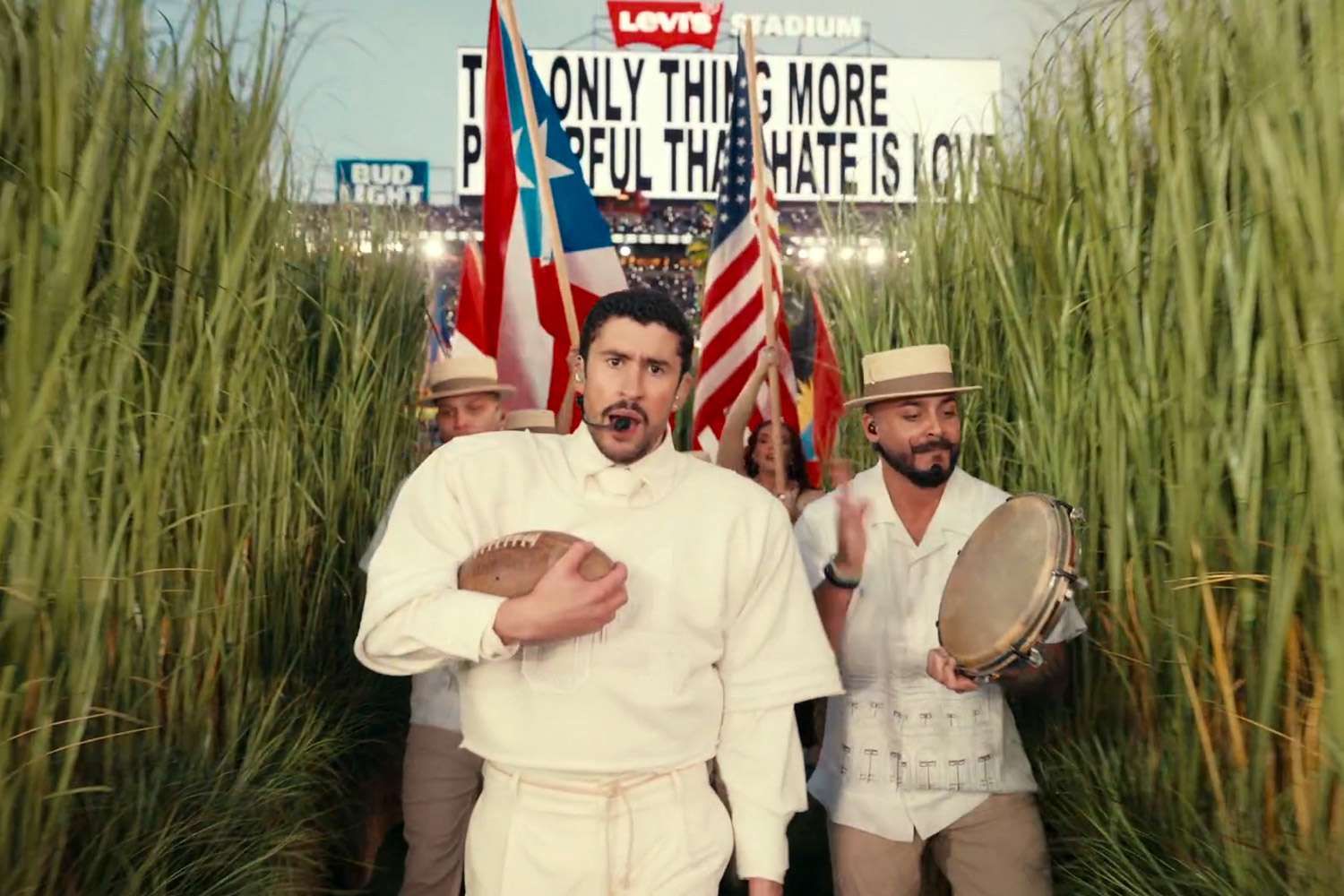
In an effort to understand the all-consuming visual world we live in, I’ve been studying visual sociology. I’ve learned that every photo mirrors the photographer. Every film speaks for the culture. No symbol is isolated from action. So as I watched the halftime show at the Super Bowl, I meditated on symbols of love: two bodies embracing faithfully, hands tightly intertwining, a mother cuddling her child, a sweet kiss on the cheek, two people dancing to the same rhythm. All of these include interaction–a moment of communion between two worlds. Two minds that, separate, might think differently or move differently, but for a brief moment they fuse. It is in acts of love that we transcend, an action that feels so difficult for so many people to perform today.
“The only thing more powerful than hate is love,” read the blaring screen at the end of Bad Bunny’s performance. The historical and cultural significance of the moment wails like the disturbing sound of a fire alarm. A Puerto Rican embodying and praising Latino culture in a time when it is being violently ripped from our hands is a statement in and of itself. But more than a protest, it was a call for love–the fountain where unity and peace spring from. This is what I’m interested in: flags coming together, America at the forefront, leading a redemptive movement driven by love, not hate. That was the vision that brought transcendence, if only for a moment. A second where viewers–at home or in bars, in restaurants or cars–were able to loosen the beliefs they keep clenched in tight fists and agree that the surpassing force is love.
Black History Month 💌
Black History Month is here, so let’s carry this intention with us all year long ✨ This is your sign to represent and appreciate culture everyday!
Start your mornings with the Pantone “For the Culture” Cortado Thermo Cup –now your coffee color can match the cup of beautiful skin tones.

For the journalists: grab yourself the Harlem Candle Co. Nightclub Map of Harlem Journal, inspired by the rhythm and brilliance of the rich culture of Harlem.

And obviously, glow with Juvia’s Place Blushed Duo– this glow is sure to make you stand out morning and night. Honor legacy and love this February!

Elizabeth Keckly (Keckley): Presidential Couturier
This Black History Month, we’ll be exploring historically notable Black designers that have influenced fashion. Starting off strong, we’ll take a look at Elizabeth Keckly (sometimes also spelled Keckley), a formerly enslaved Black woman that went on to become a leading designer and dressmaker for the social elite.
Elizabeth Keckly was born into slavery in February 1818 in Virginia. Keckly would assist her mother, Aggy Hobbs, with household tasks. Keckly was both a victim and a witness to American slavery’s cruel practices, and in her early life, she and her mother worked for different families in North Carolina, Virginia, and Missouri. Elizabeth began dressmaking for the public in St. Louis as a source of income for her slaveowners, a promise made so they did not hire her mother out.
Keckly’s work spoke for itself – she made beautiful, lush dresses known for polished elegance and intentional details. Keckly favored clean lines, boldly modern and simple silhouettes, and practical, unpretentious designs, a unique style that spoke to women in more elite circles.

Keckly quickly made a name for herself, enough to end up being able to emancipate herself and her son, George. As a free woman, Keckly continued her dressmaking business in St. Louis and Washington, D.C. Most famously, Keckly was First Lady Mary Lincoln’s dressmaker and one of her closest confidants. Keckly also worked to help other self-emancipated slaves find their footing. In her later years, she became the head of the Department of Sewing and Domestic Science arts at the first private HBCU, Wilberforce University.
Simplify Your ADHD Management with Science

Finding the right way to manage ADHD can be exhausting. Inflow changes that by combining therapy-backed strategies with an easy-to-use platform.
Access bite-sized modules, live coworking sessions, and focus rooms to keep you on track. Whether you struggle with impulsivity, anxiety, or executive function, Inflow offers practical brain hacks to help you reclaim your time.
Take the free assessment to see how you can improve focus and create lasting habits in just 5 minutes a day.

By Sarah Shrader
Ads, Angst, and Bad Bunny🐰
The Super Bowl is the quintessential American holiday. From on-field traditions to insane ads, buffalo chicken dip, and historic halftime shows, it’s the broadcasting feat of the year.
This year, football felt completely secondary. I mean, there wasn’t even a touchdown until the fourth quarter. But beyond that, the night was a slew of statements–on behalf of corporations and artists.

GLP-1’s, AI, pharmaceuticals, and crypto dominated the airwaves and left a lot of us feeling like we’re living in a dystopia. Though, it’s hard to deny that we still got some standout commercials (special shoutouts to Levi’s, T-Mobile, Pringles, and Dunkin’).
Howevere talk of the night was clearly the earth-shattering Bad Bunny halftime show. From start to finish, I was completely floored–production design, choreography, vocals, LADY GAGA, and his undeniable message sent across the nation. Bad Bunny came in mad and delivered what will go down as the best and most memorable Super Bowl halftime in history.
See you next week!
