- Les Adore Community
- Posts
- Slice Of Life Community
Slice Of Life Community
Your personal and exclusive serving of Culture, Community, and Lifestyle.

Amina Salahou
February 28, 2026
Editor in Chief: Cynthia Medina
AYO PIERRE, YOU WANNA COME OUT HERE?
Who doesn’t want a Pierre LaBorde bag? The Harlem-based, Haitian born designer selling his bags at the Grand Bazaar Flea Market in the Upper West Side is the Francis Pierre LaBorde, architect of the now-viral Pierre LaBorde bag. Color-ladden, unique, one-of-a-kind cowhide leather trapezoidal drapes shape this bag’s signature statement piece. His heritage and city life inspire every curve, color, and stitch in his bags. Handmade from LaBorde’s studio apartment in Harlem, he hand sews 200 bags a week– but after his sudden virality, has the demand for 1500 bags a week. While he’s no longer chasing a bag to make ends meet, he’s not planning on speeding up or employing shortcuts to his work.

As the antithesis to fast fashion and the instantaneity of AI “art”, this move towards handmade goods comes as no surprise. Similar to the Arts and Crafts movement after the increased rapidity in production during the Industrial Revolution, we’re in a twenty-first century artistic renaissance. Much like a coveted Hermes bag or the traditional foundation of luxury, the production of handmade goods are inherently limited, and thus forming a different type of inaccessibility. After the bag’s mass popularity, LaBorde even had to sell tickets to purchase a bag at his stand, with some fans asking to buy tickets off of each other and one fan even booking a flight from Atlanta specifically to purchase a bag.


The freedom to express individualism has become the new luxury; a function of inaccessibility as a result of the push towards conservatism and its mass ripples from politics to the policing of free speech (and dress). As Valerie van Maarschalkerwaart claimed, “The future of luxury lies not in brands becoming totalitarian lifestyle architects, but in their ability to provide sophisticated tools for INDIVIDUAL curation. The most successful will be those that inspire customers to become their own cultural curators, using brand narratives as starting points rather than destinations.” Luxury can no longer be cool if it can be replicated; perfection is no longer. Intimacy, and expert craftsmanship is the new luxury standard as the antithesis of “perfection”.
As an extension of the pandemic, we’re desperate for human connection amidst the divisive state of the world. As one of the art forms that transcends language, this physical evidence is an embodiment of and outlet for emotion, life, and empathy. LaBorde’s bags not only represent this amalgamation of the human experience, but a vulnerable act of the sharing of his culture. This culture is why so many brands are creating horizontal expansion and hosting intimate dinner parties; to create a branded world experience to entrance their audience. The Business of Fashion even remarked, “How can brands turn their customers into paying customers?” Valerie van Maarschalkerwaart commented “For expansion to RESONATE, it must arise from something deeper than market research, stemming from a brand’s natural desire to share its worldview.” And that’s exactly why LaBorde’s bags are such a luxury; it's not just a beautiful bag but an exchange of connection, culture, and craftsmanship.
Anne Cole Lowe: Beloved Crafter of Dresses🎀
Continuing our Black History Month series of highlighting historically under credited Black fashion designers, this week we’ll dive into Anne Cole Lowe.

Anne Cole Lowe was born in Clayton, AL, in 1898, developing a passion for dressmaking from her mother and grandmother. Lowe started out with making decorative fabric flowers, which would later be a signature design detail. When Lowe was 16, her mother passed away unexpectedly, and she took on the family business.
Lowe was not only a talented dressmaker, but also a brilliant entrepreneur – she briefly lived in Tampa, Florida, where she was able to build an elite clientele. She also moved to New York City in 1917 to attend a fashion school. Despite facing challenges like being segregated from the rest of her class, Lowe was known for her stellar performance and exceptional skills
Post-grad, Lowe went on to become a highly respected designer with affluent clients. She worked on commission for high fashion boutiques and shops like Saks Fifth Ave, Neiman Marcus, and Henri Bendel.
Anne Cole Lowe’s brand structure was designing and producing 1 of 1 dresses. She was known for very full circular skirts, neatly tucked and pleated. She worked primarily with structured silk taffeta, combining it with more delicate details, like lace and her elaborately hand-crafted fabric flowers.

Lowe has many accomplishments, but is best known for being the wedding dress designer for Jacqueline Kennedy –to this day, it is one of the most photographed wedding dresses in history. Lowe was also the first Black person to own a boutique on Madison Avenue in NYC.
If you liked reading about Anne Cole Lowe, then check out our profiles on Dapper Dan and Elizabeth Keckley (Keckly)!
MRS. KENNEDY 🪞💫
It’s a love story–so says JFK Jr. and our 2025 style icon, Carolyn Bessette-Kennedy. As Hulu’s Love Story takes us all by storm, I think I can say for all of us that we’re less fixated on the Kennedy Curse and more fixated on Carolyn Bessette’s old-money capsule wardrobe.
We know our girl was a regular at C.O. Bigelow, New York’s oldest apothecary. Grab one of their famous tortoiseshell headbands and a lip mask–the no-makeup makeup look screams 1990s perfection.
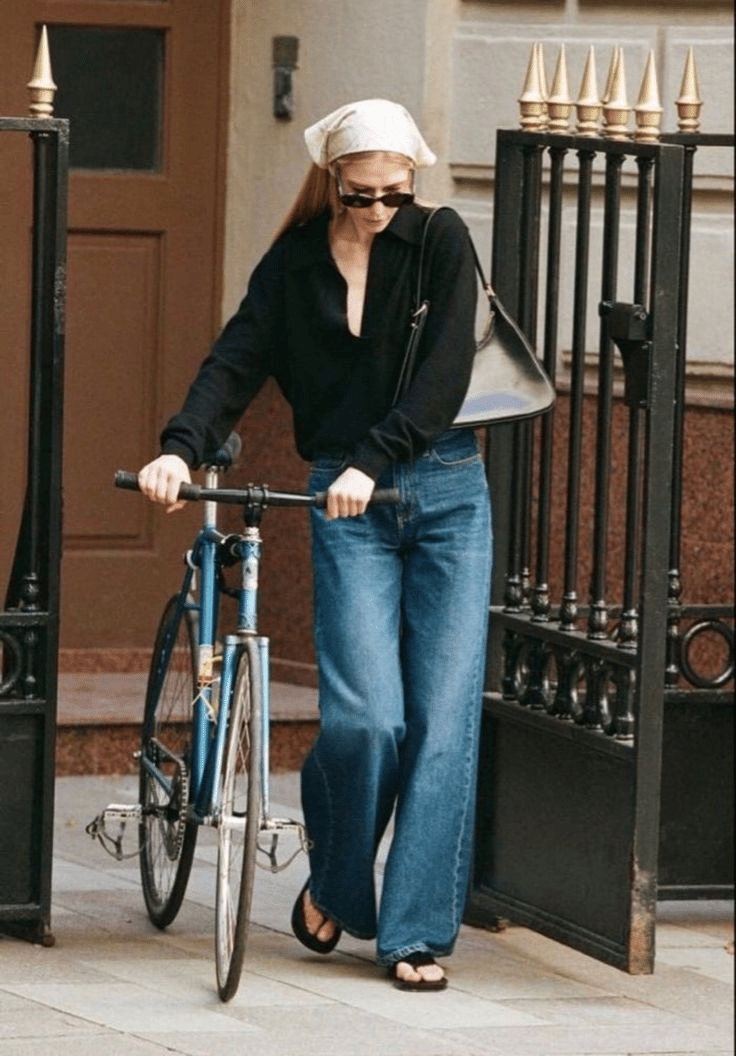
Bessette was always spotted with a spacious bag, so head to Coach’s website and check out the Brooklyn bag–a new twist on the kind of carryall that fits your best possessions. And for the finishing touch, small sunglasses (in her namesake style) from Selima Optique are the way to go for capsule coolness.

Your $200+ serum doesn't work. Stop pretending it does.

Expensive serums aren't required to prove efficacy. Just safety. You're funding marketing budgets. Celluma has clinical trials showing 66% wrinkle reduction in 30 days. FDA-cleared. Medical-grade wavelengths. Stimulates actual collagen production. The catch? Consistent use. Not glamorous. Just honest results you can measure.
Results vary. Consistent use required.
By Kennedy Chambers
TORISHÊJU DUMI: THE QUEEN OF WRAP👑
“I was inspired by my upbringing with the men and women wearing wrappers, tying wrappers around them, African mothers tying wrappers on their back to carry their babies.” – Torishéju Dumi
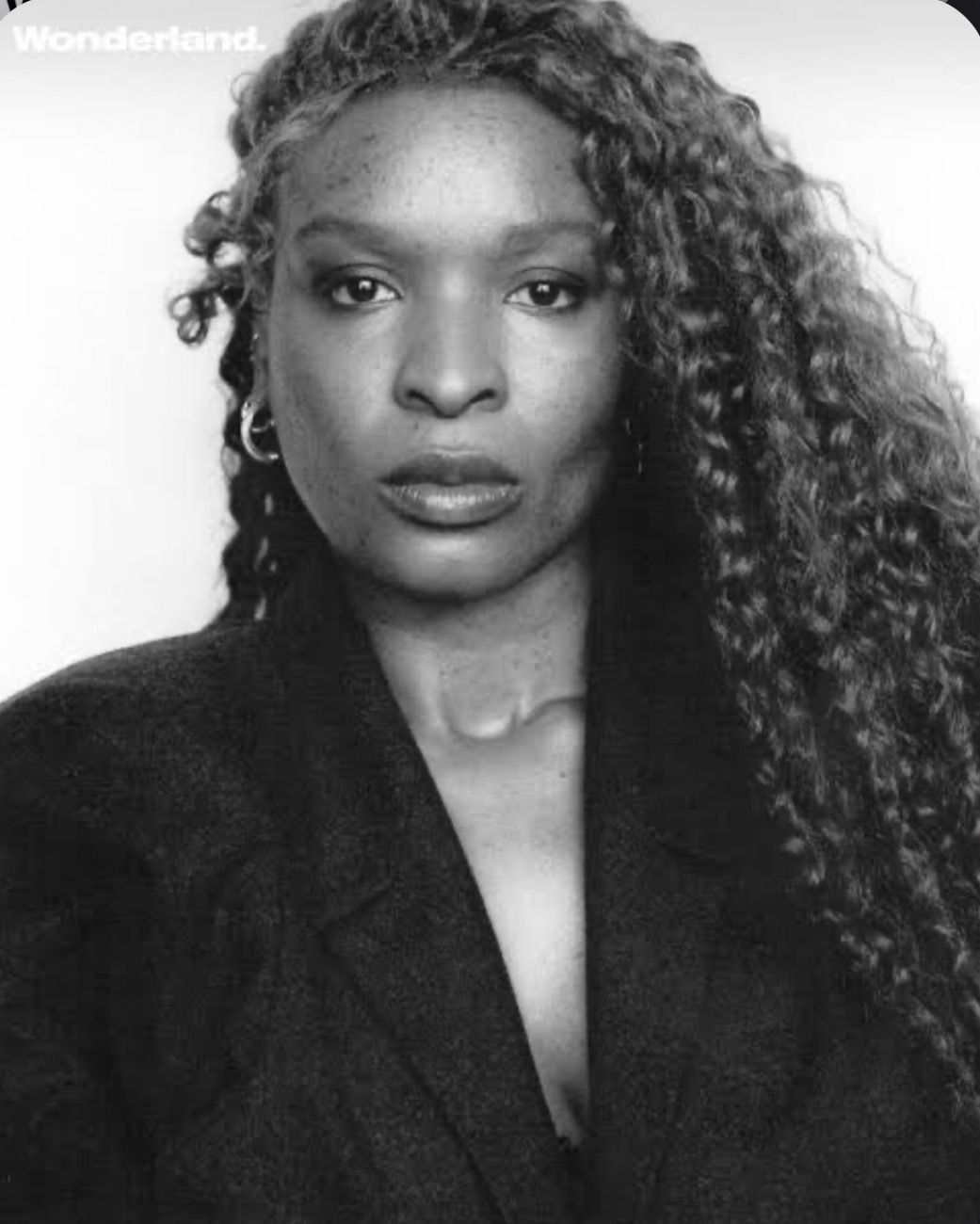
Torishéju Dumi, a Nigerian-Brazilian fashion designer, is an absolute star–and she’s working her way toward becoming a major name in fashion. What sets Dumi’s work apart is how deeply it draws from Nigerian and South American folklore, as well as her own cultural roots. She released her first collection, Mami Wata, in 2023. As a special touch, the garments were made using 100% deadstock fabric, a sustainable choice. The Met later acquired pieces from the collection for its 2024 Sleeping Beauties exhibition.

She made her runway debut for Spring/Summer 2024, closing Paris Fashion Week with an artful, sculptural collection inspired by her Catholic upbringing and her Nigerian and Brazilian family roots.
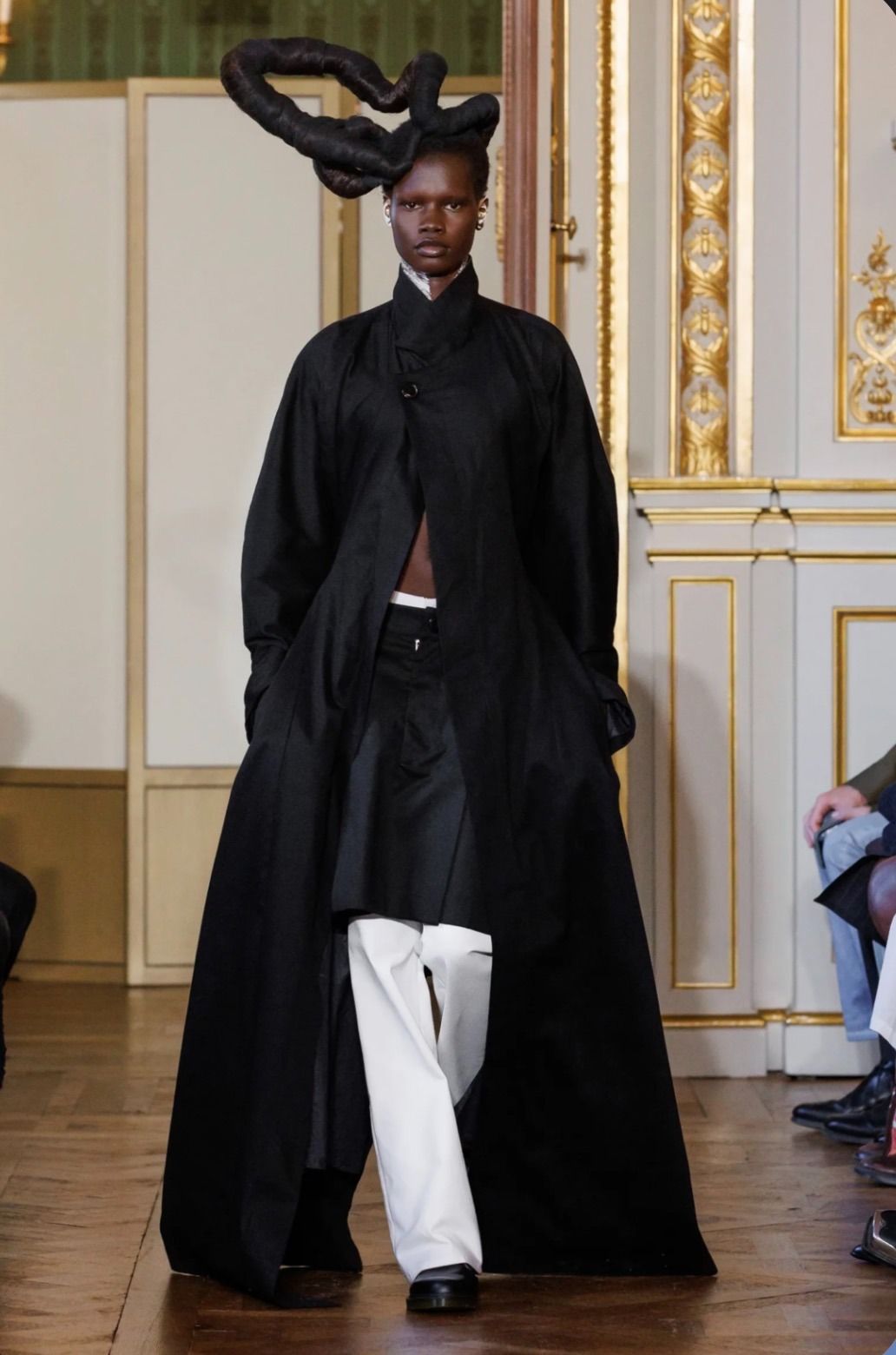
Her debut collection was modeled by legendary icons Naomi Campbell and Paloma Elsesser, who opened and closed the show. With the assistance of her mentor, Gabriella Karefa-Johnson, who styled the show, Dumi made waves in the industry with the launch of her first line. She graduated from Central Saint Martins’ fashion program in 2021 and spent years interning with designers like Ann Demeulemeester and Phoebe Philo.
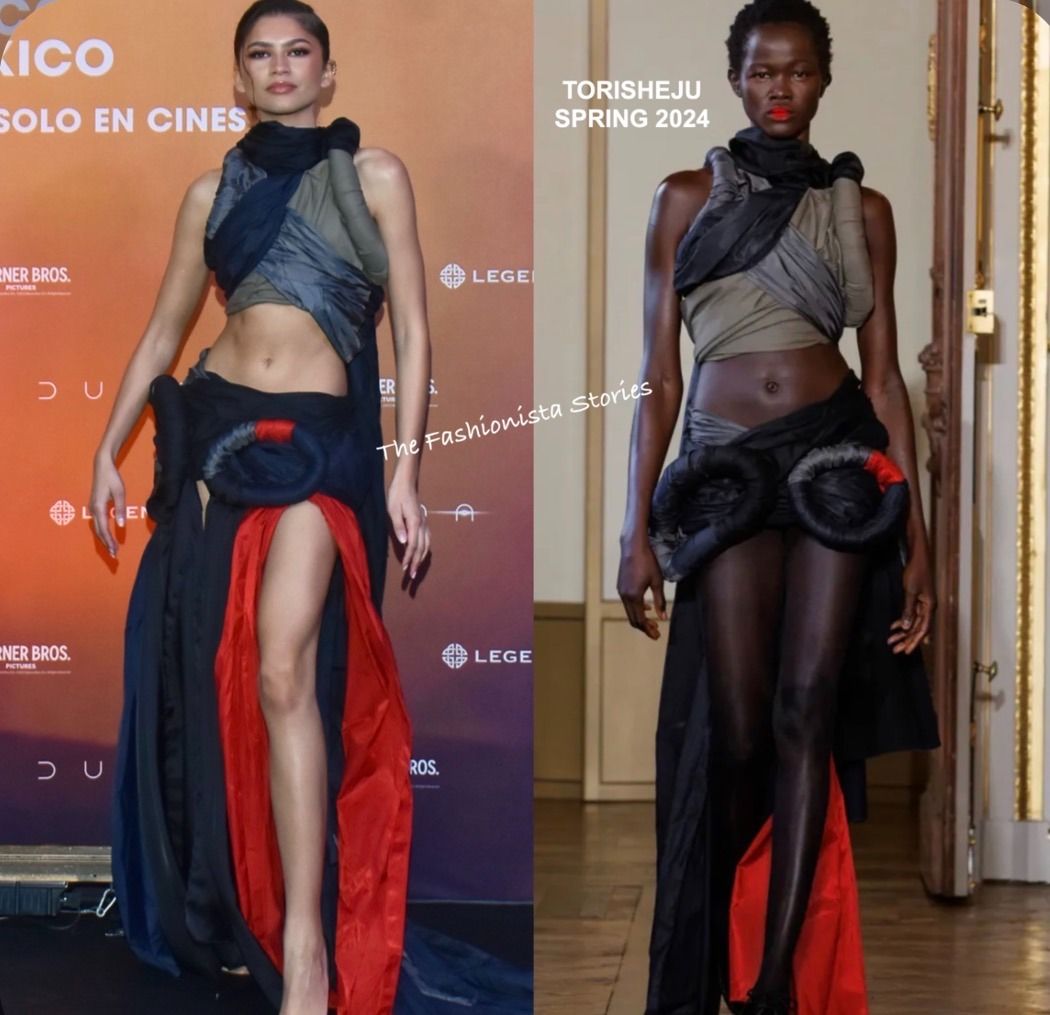
Beyond the runway, her work has appeared in Vogue Korea, Modern Weekly Style, and more. Icons she’s dressed include Zendaya, Naomi Campbell, Cynthia Erivo, and Mia Goth.

The Taller the Heels, the Closer to God👠
I love high heels. They’ve been worn by strong women for centuries. To me, they’re a sign of endurance and self-reliance. As soon as I slip them on, I feel my energy rising, my essence moving closer to my highest self. As Manolo Blahnik said, when I put them on, I “change.”


In the wake of my preteen years, I rejected anything and everything feminine. It wasn’t a rejection rooted in gender, but in the female stereotypes that didn’t seem to fit my identity. Pink and long dresses drew a kind of attention toward me that I didn’t want. My younger mind–one that is always related to the “tomboy” characters in Disney TV shows–thought I’d be perceived as less independent, less capable, less strong.
As I grew older, I began to notice the boldness and beauty in femininity. I realized masculinity wasn’t inherently linked to strength or confidence. In fact, when I tapped into the feminine qualities within myself, I felt bright and magnetic. I fell in love with fashion and with playing different parts of myself through what I wore–juxtaposing masculine and feminine silhouettes until I found a style that felt truly my own. And just like when I put on heels, I can embody a part of myself that used to feel harder to access. As Manolo Blahnik also said, “Personal style is self-possession.”

By Sarah Shrader
When Your Parents Become Your Friends🫂
I had my parents here this weekend. All I can say is–much needed. For me, college is this bizarre pendulum: being homesick while reveling in my independence, wanting to be taken care of while still building my own life.
It’s a strange time when your parents transition from caretakers to friends. I’m especially discovering this in my relationship with my mom. We went from battling over crop tops to giggling at our inside jokes in the back of the car.
On Friday, they came downtown with me for the first time. It was just me, my parents, darts, and our school. Fourteen-year-old me would have been floored to see my dad joining in–and funding–my collegiate weekend activities.

Not only that, but I feel like I know them better than ever before. There’s a newfound trust that’s grown–maybe an understanding that I’m finally the (young) adult they hoped I’d become. And while getting older definitely scares me, this is easily my favorite part of the journey.

The Reign of the Anti-Hero: Are We Over It Yet?🍿
For years, the anti-hero has dominated our screens. From Tony Soprano to Walter White, we’ve been captivated by flawed protagonists making questionable choices. But is the age of the morally ambiguous main character finally coming to an end?
At first, these characters felt refreshing–a departure from the traditional, squeaky-clean hero. But after years of constant exposure, the anti-hero can start to feel predictable. Are we craving something different now? A return to characters with genuine integrity–or a new kind of complexity altogether?
The future of TV and film may lie in exploring different shades of gray, moving beyond the anti-hero to find new and nuanced ways to tell stories about the human condition.

See you next week!
